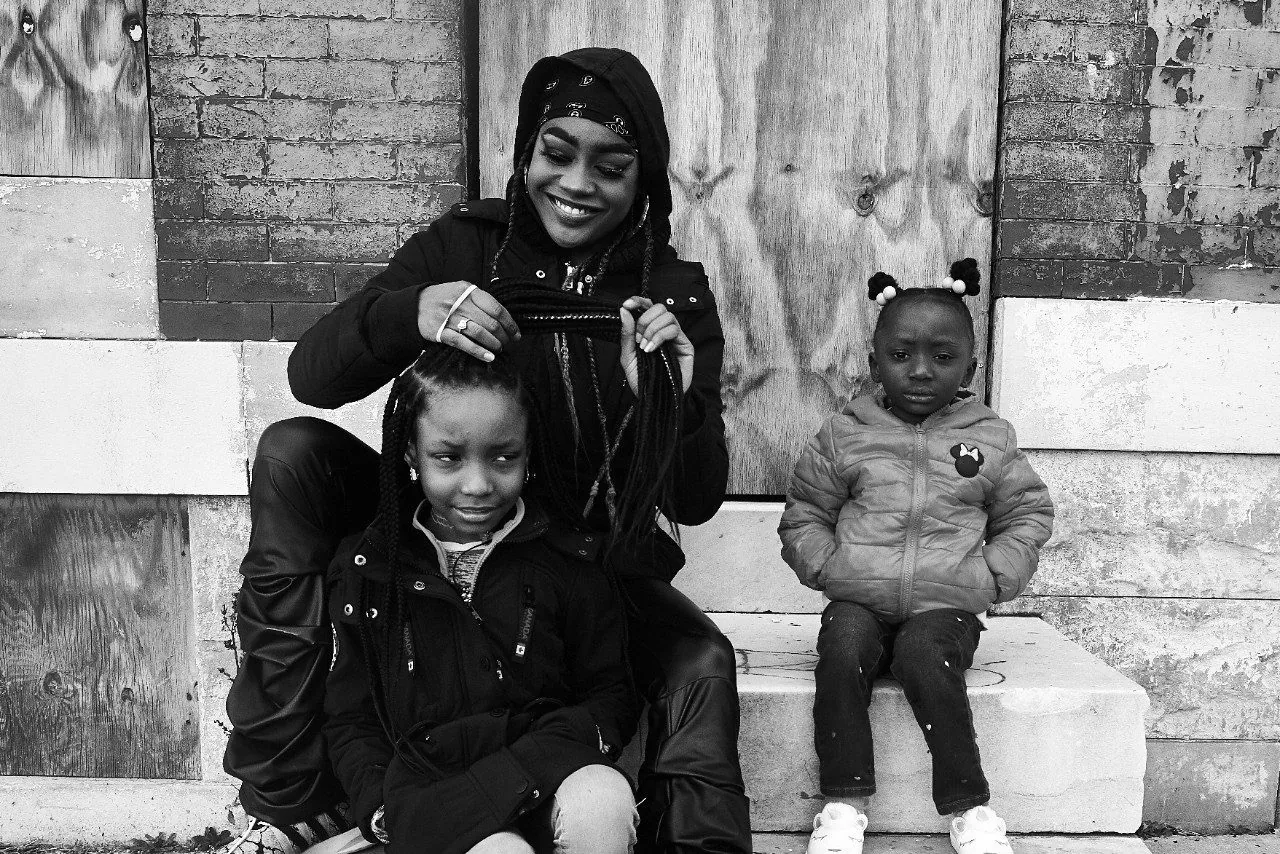
Baltimore is Beautiful, Baltimore is Black
More than statistics: A personal look at Baltimore's beautiful complexity

A headline caught my eye as I was scrolling through my timeline a few weeks back: "Baltimore crime down double-digit percentages." After reading the article, I read another one, then another one. It led me to the documentary The Body Politic about councilman Brandon Scott's run for mayor and his first couple of years in office. The documentary put the human aspect of Baltimore into perspective. This is about more than crime data.
Luckily, I have a really good friend from Baltimore. I reached out to him after watch the documentary. I asked him what it was like to grow up in Baltimore as a millennial. He replied, "Let's get on a Discord call and talk about it." He then introduced me to his childhood friend who still lives in Baltimore. After a few hours on the call, I learned a lot, but most importantly, I learned that Baltimore is beautiful.
Baltimore is a Black city for Black people.
The neglect shown toward the city, paired with the willingness of government officials and the ruling class to exploit Baltimore, is a direct reflection of the Amerikkkan government's oppression of its Black citizens. Through it all, the heart and soul of Baltimore thrives. Now, slowly, the hope and hard work of the people of Baltimore is showing progress.
A History of Exploitation
Historically, the local and state government has widely ignored or stolen from the city. In the 1940s, Nancy Pelosi's father was the mayor. Thomas D'Alesandro Sr. was Baltimore's mayor with strong ties to Maryland mobster Benjamin "Benny Trotta" Magilano. There are instances of D'Alesandro interfering with criminal cases and obstructing justice. His largest donors had mob ties. A couple of decades later, his son Thomas D'Alesandro III became mayor of Baltimore after running a pro-civil rights campaign. Once in office, D'Alesandro III was largely apathetic toward any meaningful change.
In between the D'Alesandro family reign was Governor Spiro Agnew, who later became Richard Nixon's vice president. He gained popularity by using excessive force against civil rights activists and gave an infamous speech that launched him into the national spotlight by belittling the civil rights movement in Baltimore. Baltimore, which had an active civil rights movement of its own, was beaten down by the state's own government and ignored by the mayor.
The Civil Rights Response
During the Civil Rights era, Baltimore emerged as a crucial organizing hub where grassroots activism took root across both sides of the city. The west side became an important center for organizing efforts, while the east side served as the focal point of civil rights activity.
Historically, the local and state government has widely ignored or stolen from the city.
Local organizations sprang up to fill the gaps left by indifferent officials. CORE established boards specifically to combat poverty in Baltimore neighborhoods. The Civic Interest Group worked to increase voter registration, provide candidate endorsements, and build grassroots organizing capacity while strongly embracing the emerging concept of Black power. U-Join, a union job advocacy organization, partnered with Mother Rescuers, an anti-poverty activist group, to address economic inequalities facing the community.
Despite these coordinated efforts by Baltimore's communities to advocate for meaningful programs and change, their demands were largely ignored by elected officials. This set the stage for decades of tension between community needs and political responsiveness.
The Crack Era
The 1980s and 1990s ushered in the crack era to Baltimore, and the city was decimated by the epidemic. In 1994 alone, 40,000 Baltimoreans were arrested on drug charges. The justice system responded with harsh sentencing that offered little rehabilitation, while violence escalated dramatically.

Each year throughout the 1990s saw 300 homicides or more, creating a climate of fear and loss that would define an entire generation's experience of the city. This was the Baltimore that would shape the childhood and adolescence of millennials like my friend and his childhood companion.
Growing Up in Post-Crack Era Baltimore
The millennial and part of the Gen Z generations are children who were born in the ever-collapsing state that Baltimore was left in post-crack era. When asked, both of my conversation partners said that the effects of the outside world weren't felt as children. They had happy childhoods, but the reality of Baltimore's state made them grow up earlier than the average child.
Middle school for most of us was about dealing with the growing pains of puberty. Same thing in Baltimore, but life choices that could alter your life forever were being made. Were you going to start to let the city feed off of you and slowly fall into the streets, or were you going to get your life together? These were choices made at 13 or 14 years old, and by high school you start to see people fall victim to the circumstances of a city left to fail. The older one gets, the more you see it happen. It leaves people feeling hopeless and wondering how long they have until they're doomed to the same fate.
The Other Side of Baltimore
Much like the people of Baltimore, the city has more than one side to it. As I heard them name off words and phrases and the other one would laugh and say, "Oh yeah, that used to be next to place X," or describe a term used for a look or piece of clothing, I realized Baltimore is rich in culture. There is fun to be had; ball to be played at the dome. This side of Baltimore cannot be seen in statistics or news reports because it doesn't fit the narrative that Baltimore is a failed Black city.
Modern Baltimore: Signs of Hope

Now we have reached modern Baltimore, where I stumbled across the article about the decrease in crime and Mayor Scott. Today, Baltimore is experiencing a dramatic shift under Mayor Brandon Scott. While he serves as the face of the city's turnaround, he is not the sole reason for the progress. A Baltimore native who knows and loves the city, Scott worked his way through city government before running for mayor. He has consistently fought to secure funding for the city and its programs, understanding that real change requires resources and commitment.
The numbers tell a remarkable story. Crime rates are down across the board, with homicide rates reaching their lowest point in 50 years. This transformation stems from viewing crime as a public health crisis rather than simply a law enforcement problem. This approach recognizes that multiple factors contribute to both violent and non-violent crimes. Programs like Safe Streets, MONSE, and GVRS now lead the charge in crime prevention, addressing root causes rather than just responding to symptoms.
However, the reality of progress is complex. Even with falling crime rates, people are still losing loved ones to violence. Statistics offer little comfort when you are staring at the body of someone you love. There is still a very long way to go, and the pain remains real for too many families. Yet there is hope and love in the city. The citizens want a better Baltimore, and for the first time in decades, that desire feels within reach.
A Reflection of Amerikkka
The issues that plague Baltimore are the same issues that plague all Black citizens. Maybe not to the scale of what has attacked Baltimore, or perhaps you live somewhere where it feels similar. Left without resources, the feeling of survival mode, forced to make tough life decisions at a much younger age—Baltimore reflects how the rest of Amerikkka feels about us.
Let me leave you with a few things my Baltimore friends wanted you to know: The food is top five, hands down. Under Armour, Nike tracksuits, and Nike boots belong to Baltimore. They remember getting clowned for wearing those New Balance 498s that you're wearing as you read this post. The kids are bright as hell from the city, and Baltimore is beautiful.
Stay woke,
Loc
Resources:
https://www.winterwatch.net/2024/10/fbi-vault-on-pelosis-politician-father-thomas-d-alesandro/
https://baltimoreheritage.github.io/civil-rights-heritage/1966-1976/
https://www.drugrehab.com/2017/11/17/cocaine-crack-and-marylands-opioid-epidemic/amp/
